Tyson Foods: A Time Study Could Prove Individual Hours Without Erasing Individual Injury
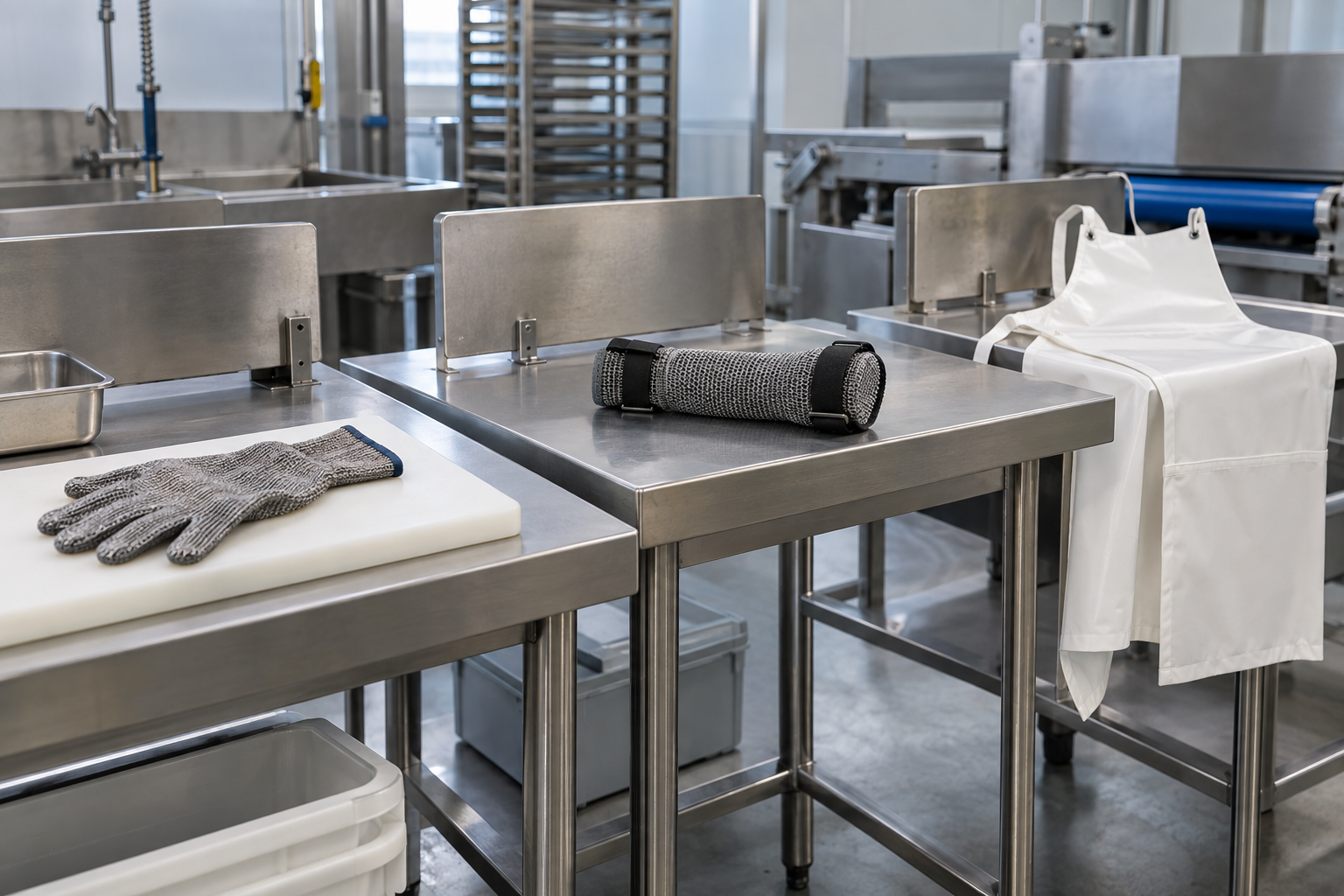
In Tyson Foods, Inc. v. Bouaphakeo, 577 U.S. 442, 455–62 (2016), the U.S. Supreme Court upheld class certification and the use of representative time evidence in a wage case involving protective equipment. The evidence could have supported each employee’s individual claim where Tyson had not recorded the disputed time. The Court declined a categorical rule for statistical proof and left the question of distributing damages to uninjured employees for proceedings on remand.
The payroll gap concerned required protective gear
The employees worked in the kill, cut, and retrim departments of an Iowa pork-processing facility. Their protective equipment varied with the assigned work. Tyson paid production-line time and, for some workers, a fixed allowance, but did not record the actual donning and doffing time. The employees asserted FLSA overtime and a related Iowa wage claim. See the official opinion at 446–49.
The district court certified an Iowa Rule 23 class and an FLSA collective action. At trial, the parties stipulated that certain knife-protection equipment time was compensable; other issues remained for the jury. The case therefore did not decide that every item of work clothing is compensable in every job.
The study was combined with individual payroll data
An expert made 744 videotaped observations and estimated average daily time of 18 minutes for cut and retrim workers and 21.25 minutes for kill-department workers. Another expert combined those estimates with each worker’s recorded time and subtracted paid allowances to assess whether the employee crossed the federal 40-hour overtime threshold. See Tyson Foods, 577 U.S. at 450–51.
This method still identified employees who had no overtime claim under the calculation. The jury awarded approximately $2.9 million in unpaid wages, less than the expert’s proposed amount. Tyson challenged certification and the use of the average, arguing that variation among workers prevented a common answer and risked recovery without individual injury.
The Court asked whether the evidence would work in an individual suit
“Its permissibility turns not on the form a proceeding takes—be it a class or individual action”
Tyson Foods, 577 U.S. at 455.
The quoted passage at 455 continues by focusing on the evidence’s reliability in proving or disproving the elements of the claim. The Court rejected an across-the-board exclusion of representative proof. It relied on the framework of Anderson v. Mt. Clemens Pottery Co., 328 U.S. 680, 687–88 (1946), under which missing required records do not make proof of uncompensated work an impossible hurdle.
Employees still must show that uncompensated work occurred and provide a just and reasonable inference of its amount. The framework then gives the employer an opportunity to supply precise evidence or rebut the inference. Here, the study addressed a gap created by Tyson’s missing records, and an individual worker could have relied on it. The Court did not treat the class device as permission to discard substantive elements.
The opinion preserved limits on sampling and recovery
The Court distinguished the disparate employment settings in Wal-Mart Stores, Inc. v. Dukes, 564 U.S. 338 (2011). Tyson’s workers shared a facility, similar work, and the challenged compensation policy. Reliability and fit remained central. Tyson had not sought a Daubert hearing or offered a rebuttal expert, although it attacked the study before the jury. Those litigation choices were part of the record, not a promise that every similar study must be admitted.
The Court also declined to decide the distribution issue before the award had been allocated. Tyson could challenge a method that paid employees who had not suffered the asserted overtime injury. Chief Justice Roberts’s concurrence stressed the allocation concern; Justice Thomas, joined by Justice Alito, dissented over the treatment of individual variation and proof. See Tyson Foods, 577 U.S. at 460–67.
Practical implications for workers and employers
The case supports careful evidence development, not an automatic shared average. Preserve equipment differences, job assignments, policy changes, paid allowances, and individual payroll records. The PPE time evidence guide explains how to build that record before drawing a group-wide inference.
California claims and other representative proceedings require their own legal analysis; Tyson did not resolve every state-law certification or proof rule. Our employment practice overview and consultation page provide a path to review the actual work sequence and available records. The central question is whether the proposed proof reliably establishes the elements for the people seeking recovery.
Questions readers ask
Did Tyson approve averages in every class action?
No. The opinion expressly rejected categorical rules and focused on the purpose, reliability, and individual usefulness of the evidence.
Could uninjured workers automatically share the award?
No. The Court left the allocation question open for remand and allowed a challenge to a method that would compensate uninjured workers.
Assess whether the evidence supports each claimed unpaid interval
Mishra X Trial Lawyers can help assess the available procedure using your specific documents. Call (949) 343-9735 or email office@mishrax.com.