What to Do When Your California QME Appointment Notice Is Wrong
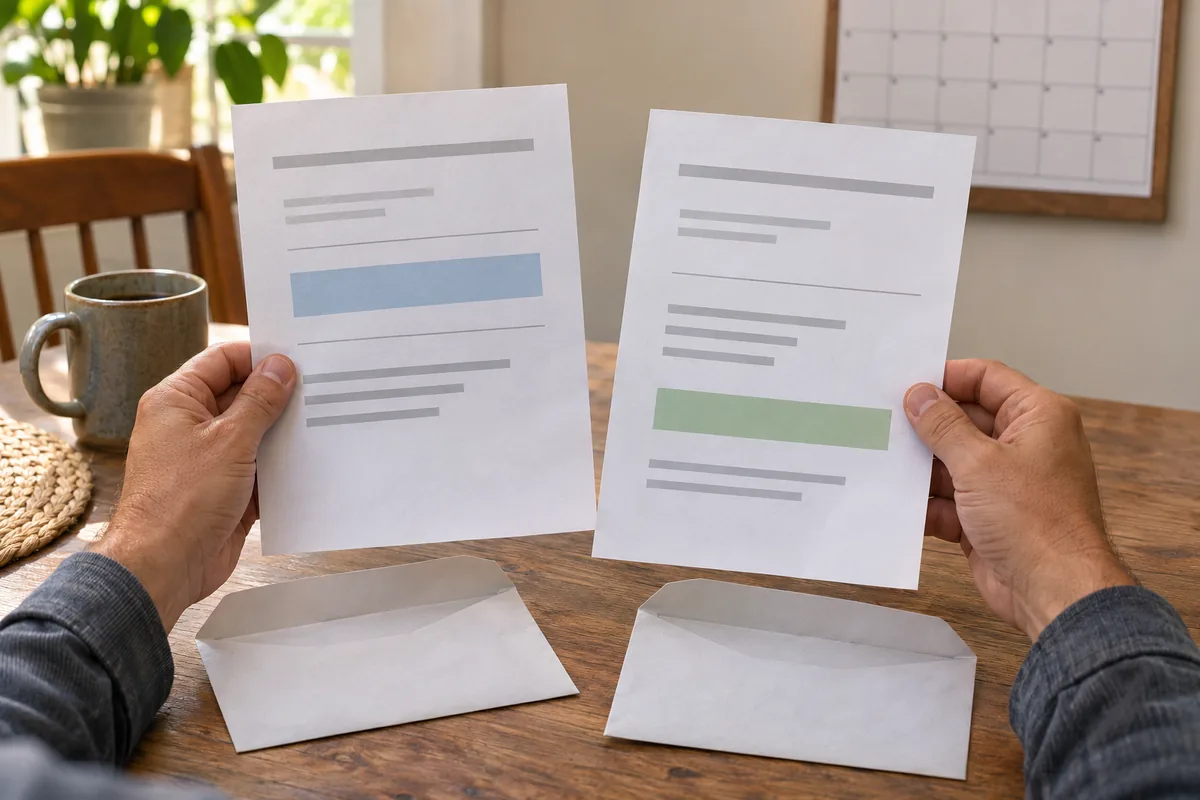
If your QME appointment notice gives a different date, office or interpreter language than you expected, call the evaluator’s scheduling office as soon as you see the mismatch. Ask the office to confirm the appointment details in writing or send a corrected Form 110. Until you have confirmation, treat the appointment as still scheduled. Asking the office to correct the notice leaves the appointment in place.
A qualified medical evaluator (QME) examines you and prepares a report for your workers’ compensation claim. The appointment details matter because the evaluator may be expecting you at a different office, and asking to change the appointment close to the date has its own rules.
Find the exact discrepancy before you call
In the appointment section of Form 110, compare the date and time of the examination with your notes from scheduling. The form also has a separate date for the appointment call. Look for the examination address, which has its own field. The address for sending medical records and the QME’s own street address appear separately.
If this is your first comprehensive evaluation, compare the examination address with the office listed on your QME panel selection form. Under section 34(b), the first evaluation takes place at an office on the panel selection form unless the parties agree in writing to use another office listed with the Medical Director. A follow-up evaluation may take place at another listed office of the selected QME if it is within a reasonable distance of your home.
Check the interpreter box and the language field, too. Section 34(c) calls for the notice to say whether a certified interpreter is needed and in what language. The party responsible for the cost arranges the interpreter. If the box or language is wrong, ask who is making the arrangement and request confirmation before trying to book anyone yourself.
Ask the evaluator’s office for a written answer
Tell the scheduling office exactly what differs. “My notice says the exam is at the Anaheim office, but the panel form I have lists the Santa Ana office. Which address does your schedule show?” gives the office something to check. Ask for the confirmed date, time and street address in writing. If you need an interpreter, ask the office to confirm the language and tell you who is arranging it.
The QME must postmark or fax the appointment notice to you and the claims administrator, or to the employer if there is no claims administrator, within five business days of making the appointment. In a represented case, copies also go to each known attorney. That deadline runs from when the evaluation was scheduled. If you have a lawyer, send them both versions and let them know when you received each one.
Keep the original notice, the corrected notice, the envelopes and any fax confirmations. Make a short note of whom you spoke with and when. The service declaration on page two of the form can help you see whom the office served and when it says service took place. Together, those records help explain why you expected a particular appointment and when you tried to sort out the difference.
If you actually need to move the appointment, count business days
A request to fix paperwork leaves the scheduled appointment in place. If you or your lawyer actually need to cancel or reschedule, section 34(h) generally requires good cause when fewer than six business days remain. The blank Form 110 uses “calendar days” in its introductory instructions. The current regulation uses business days in both subdivisions (d) and (h). Use the regulation when checking whether a cancellation is within that period.
A cancellation by a party must be in writing, give the reason and be served on the other side. If you cancel orally, follow up within 24 hours with a written confirmation by fax or first-class U.S. mail that meets those requirements. Under subdivision (i), the postmark or fax receipt establishes the cancellation date. If a party cancels for good cause, the injured worker owes no missed-appointment fee.
An evaluator who cancels must tell the parties the reason in writing. The evaluator generally needs good cause to cancel with fewer than six business days left and must reschedule within 60 calendar days of cancellation unless the parties agree in writing to a later appointment. The Workers’ Compensation Appeals Board can resolve disagreements about whether good cause existed.
Get help promptly if the appointment is close
Suppose your exam is four business days away and the notice says you do not need an interpreter, although you requested one when scheduling. Call the QME office with the notice in hand. Ask the office to confirm the language, who will arrange the interpreter and whether the appointment is still on. Keep a record of the response. If the office cannot resolve the discrepancy, send the notice to your lawyer if you have one, contact the claims administrator about the interpreter arrangement, or ask the Division of Workers’ Compensation’s Information and Assistance Unit promptly about the procedure. A mistaken box alone cannot tell you whether the Board would find good cause for a cancellation.
If the appointment already passed, the next questions are different. Start with what to do after a missed QME appointment and keep the same notices and contact records.