Why Workers’ Compensation Legal Representation Matters in California
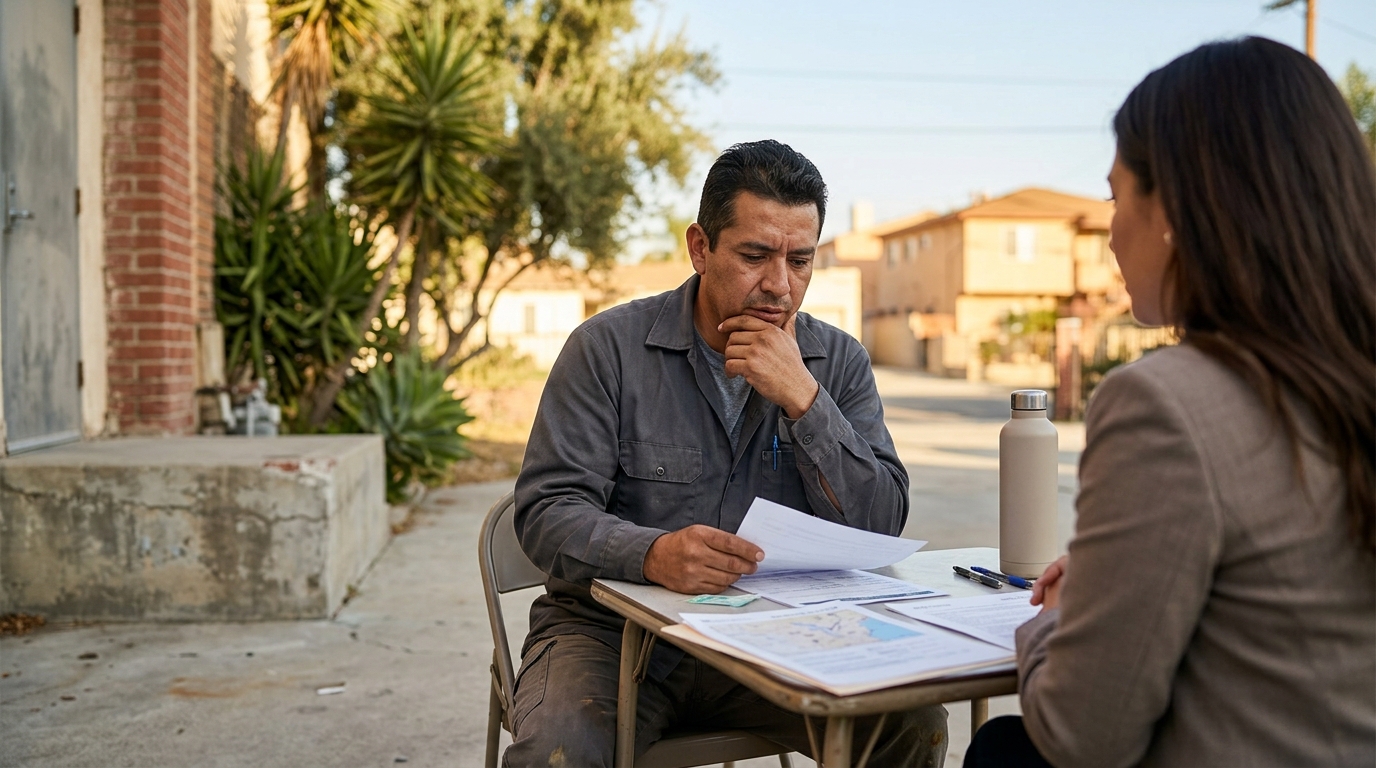
An objective overview explaining how legal representation affects California workers’ compensation claims, including appeals for denied claims, disability benefit calculations, and Social Security Disability Insurance offsets.
When a workers’ compensation dispute overlaps with Social Security disability benefits, one decision can affect more than one payment. A lawyer’s useful task is to identify the disputed benefit, check the supporting figures and notices, and explain what a proposed resolution would change. A larger settlement number is not the only question.
Begin with the actual problem: A denied injury claim, a wage-loss calculation, a disability rating or a Social Security offset notice. These are different decisions. Representation can help connect them without assuming that the same filing or medical report resolves every issue.
This guide focuses on the coordination questions to bring to that review, particularly where workers’ compensation and Social Security Disability Insurance (SSDI) payments interact.
Navigating Denied Claims and the Formal Appeal Process
A claim-denial letter says the administrator disputes workers’ compensation coverage. A utilization-review letter about a recommended treatment raises a different question, and an SSA offset notice is a federal benefit calculation. Put the complete letter and its enclosures in the file before calling every disagreement an “appeal.” The DWC claim-denial guide explains the WCAB path, including an Application for Adjudication and a separate request for a hearing.
For a coverage dispute, identify what each step is meant to establish:
- Filing administrative documentation: Identify the existing claim and any WCAB case number, the required application or hearing request, and proof of service.
- Gathering evidence: Match the denial’s stated reason to the missing medical or factual proof rather than collecting documents without an issue in mind.
- Hearing representation: Identify the disputed issues and supporting exhibits for the workers’ compensation judge. Representation does not guarantee that an unfavorable opinion or notice will be reversed.
Evaluating Disability Benefits and Long-Term Earning Capacity
Workplace injuries frequently affect an individual’s long-term ability to work. When an injury reduces or eliminates earning capacity, obtaining appropriate wage replacement and disability benefits becomes a crucial consideration in the claims process.
Distinguish the available disability benefits from the way disputed rights may be resolved:
- Temporary disability payments: Wage replacement provided while an employee is recovering and unable to work.
- Permanent disability benefits: Financial compensation awarded when an injury results in permanent impairment affecting earning capacity.
- Settlement structure: A lump-sum compromise may resolve specified disputed rights. It is a way of resolving a claim, not a separate statutory benefit to add to every disability award.
- Vocational retraining assistance: A qualifying retraining voucher or other available support depends on the applicable statutory conditions; it is not an automatic payment to every worker changing jobs.
Ask which payment period and medical finding support the figure under review. Temporary wage-loss benefits, permanent-disability findings and a settlement allocation do not measure the same thing. A work restriction should not be silently replaced with an assumed permanent-disability percentage, and a settlement total should not be treated as a monthly benefit rate.
Managing SSDI Offsets and Secondary Benefit Impact
The complexity of a workers’ compensation claim increases significantly when an injured worker is also receiving or applying for Social Security Disability Insurance (SSDI) benefits. The intersection between state workers’ compensation benefits and federal disability programs requires careful coordination.
Workers’ compensation can reduce Social Security Disability Insurance (SSDI), including benefits paid to family members on the same earnings record. Under SSA’s offset rules, the combined payments are compared with a limit: The higher of 80% of the worker’s average current earnings or the applicable Social Security family-benefit amount. A lump-sum settlement can also affect the calculation. It is not simply a reduction that standard settlement wording automatically removes.
Before signing, review the settlement, payment history and documented medical, legal or related expenses that SSA may exclude. The treatment depends on the actual expenses and payment structure, not a label alone. Keep SSA’s notices and report changes in workers’ compensation payments so the calculation can be checked. Prepare a coordination sheet with the award or settlement, each period of workers’ compensation payments, the SSA calculation notice, any affected family benefits and the expense documentation. Mark a disagreement with the amount or period SSA used separately from disagreement with the underlying California claim.
Strategic Considerations in Insurance Defense and Claim Resolution
Aneeta Mishra’s professional background includes defending insurance carriers and employers before representing injured workers. For a present claim, the value is practical: Testing the reason for a denial, the medical assumptions and the proposed payment terms against the documents. Prior experience does not guarantee a result or make an unsupported calculation correct.
Before authorizing a settlement, ask who will address each benefits issue and what documents they need. Medicare’s future-medical interests and SSA’s SSDI offset are separate inquiries. An allocation label is not a substitute for its factual basis, and a workers’ compensation engagement should not be assumed to include every federal benefit proceeding.
Frequently Asked Questions
What steps are involved when a workers’ compensation claim is denied in California?
Read the denial’s reason and identify any existing WCAB case. DWC describes filing an Application for Adjudication and requesting a hearing for a coverage dispute. A treatment-necessity denial or SSA offset notice has a different review route; bring the actual notice for advice.
How do workers’ compensation settlements affect Social Security Disability Insurance (SSDI)?
A workers’ compensation settlement can reduce SSDI under SSA’s offset calculation. Review the award, payment history and documented expenses before signing; specific wording alone does not guarantee that SSA will exclude a payment or eliminate an offset.
What types of disability benefits are available under California workers’ compensation?
Depending on the extent of the injury, workers may receive temporary disability payments for lost wages during recovery, permanent disability compensation for lasting impairment, vocational retraining support, or an agreement resolving specified disputed rights. A settlement is not an additional benefit category.
The Bottom Line
A useful review ends with specific answers: Which decision is disputed, what proof or calculation is missing, what deadline appears on the notice, and how a proposed settlement affects other payments. If SSDI is involved, bring the actual SSA computation as well as the workers’ compensation award. Neither a general hiring pitch nor standard settlement wording answers those questions.
Review Your Contested Claim or Benefit Calculation
Mishra X Trial Lawyers can evaluate your California workers’ compensation claim, denied benefit notices, or proposed settlement allocations to protect your long-term interests. Bring your denial letters, wage records, and benefit determination summaries. Learn more about our related services.
Call (949) 343-9735 or email office@mishrax.com.