Reyes: A Seizure-Triggered Scaffold Fall Was a Work Injury
When an insurer points to a preexisting seizure disorder after a serious fall at work, it can feel as though the accident injuries have been overlooked. A careful review needs to examine the medical event that triggered the fall and the part the workplace played in the injuries.
In Reyes v. Hart Plastering, 70 Cal. Comp. Cases 223 (2005), the Workers’ Compensation Appeals Board found a plasterer’s fall injuries compensable even though a nonindustrial seizure had caused the fall. The Board replaced a denial of industrial injury and returned the remaining benefit issues for further proceedings. Its February 10, 2005 decision explains why proving a work injury and apportioning permanent disability involve different questions.
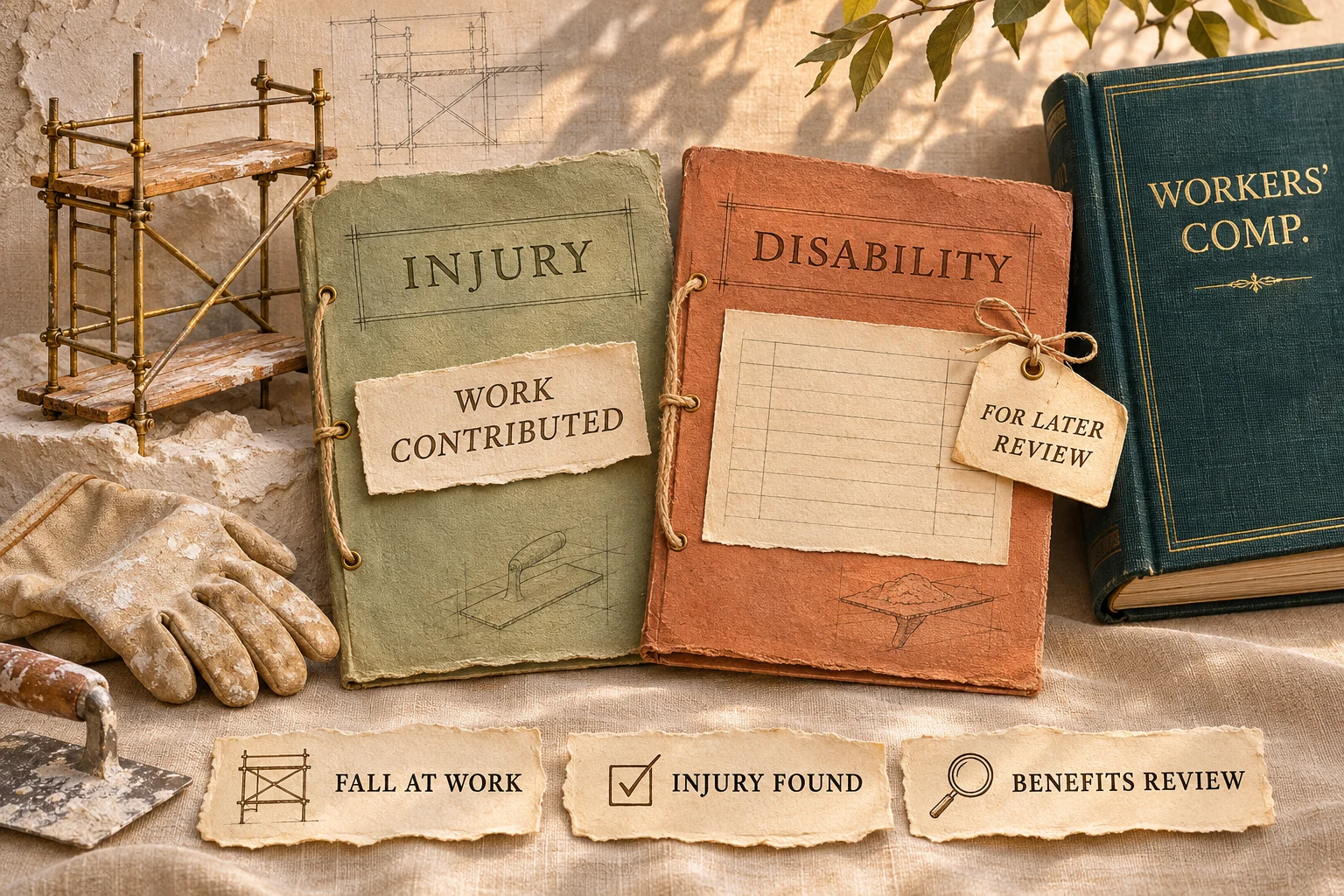
The medical opinion became the basis for denying the injury
Jose Reyes was working as a plasterer on May 22, 2000. The opinion describes him attempting to step onto a scaffold, missing the wooden board with his right foot and falling approximately 53 feet. He sustained severe injuries and was hospitalized for four days.
The employer rejected liability. After trial, the workers’ compensation judge found the medical record inadequate for a decision and appointed Robert Kounang, M.D., under Labor Code section 5701. Dr. Kounang’s November 4, 2003 report attributed the fall to preexisting seizure activity.
The judge used that medical conclusion and his reading of the 2004 apportionment amendments to find that Reyes had suffered no industrial injury. His September 16, 2004 decision denied the claim. In the Reyes opinion, the Board recounts the judge’s reasoning: Section 4663 required an assessment of causation, and the seizure disorder had precipitated the accident.
Reyes challenged that reasoning on reconsideration. He argued that the injuries from striking the worksite and ground were compensable even though the seizure itself was nonindustrial. That distinction became the center of the Board’s analysis.
The worksite contributed to the injuries from the fall
The Board began with the requirement that an injury arise out of and occur in the course of employment. As Reyes explains, employment and injury must have a causal connection, and employment can be a contributing cause rather than the sole cause. The workplace’s role therefore needed its own examination alongside the medical explanation for the fall.
The Board applied Employers Mutual Liability Insurance Co. of Wisconsin v. Industrial Accident Commission (Gideon), 41 Cal.2d 676 (1953). Its discussion in Reyes recounts an employee who suffered a nonindustrial seizure, fell while walking on the employer’s premises and struck his head on the concrete floor. The Supreme Court had treated the floor’s contribution to the injury as part of the employment connection.
The same reasoning mattered to Reyes’s accident. The Board described the injury as the impact of his body against the wall, scaffolding, possibly a landing, and ultimately the ground. The seizure triggered the fall, while those workplace circumstances contributed to the injuries. The opinion also states that the occurrence in the course of employment was undisputed.
This makes the accident description important. A report explaining the seizure and evidence showing where Reyes fell, what he struck and how he was injured addressed connected parts of the event. The Board evaluated the resulting physical injuries instead of treating the seizure diagnosis as the complete answer to the claim.
Apportionment answers a separate permanent-disability question
The judge had relied on changes made by Senate Bill 899 to Labor Code sections 4663 and 4664. Those provisions addressed apportionment of permanent disability: The share of permanent disability caused by the industrial injury compared with the share caused by other factors.
The Board’s statutory analysis in Reyes kept that issue separate from whether the accident caused a compensable injury under section 3600. It explained that the new apportionment provisions concerned liability for permanent disability. The injury question still required an assessment of the employment contribution to the accident injuries.
The distinction remains visible in the current statutory text. Labor Code section 3600 addresses an injury arising out of and in the course of employment, including the requirement that employment proximately cause the injury. Section 4663 addresses causation of permanent disability and calls for a physician’s explanation of the approximate percentages attributable to the industrial injury and other factors. Section 4664 addresses the employer’s liability for the industrially caused percentage and the treatment of prior permanent-disability awards.
For a worker reviewing a medical report, the practical question is what the doctor is attributing to the earlier condition. An explanation of what triggered an accident, an opinion about the resulting injuries and an allocation of lasting disability should each be read for the question it actually answers. Our Escobedo analysis examines the separate need for a reasoned medical explanation supporting a permanent-disability allocation.
The Board replaced the denial and returned the benefit issues
The operative order in Reyes rescinded the September 16, 2004 decision and substituted a finding that Reyes sustained an injury arising out of and in the course of his employment. It deferred all further issues, reserved jurisdiction before the workers’ compensation judge, and returned the matter for further proceedings and decision.
That result established the industrial-injury finding. The remaining proceedings would determine the benefits to which Reyes was entitled. The opinion expressly identified possible later apportionment of permanent disability as a separate issue. Its actual remand explains why winning the injury dispute and resolving the amount and scope of benefits were different steps in this case.
What to examine in a denial tied to an earlier condition
If a denial focuses on an older diagnosis, compare its stated reason with the accident account and the medical report. Identify whether the dispute concerns the event that started the fall, the injuries caused by the fall, or the causes of permanent disability. In Reyes’s case, treating those questions as interchangeable led the judge to the wrong injury finding.
Preserve an accurate account of the task and location, available witness information, incident reports and any photographs that help explain the worksite. Give the medical evaluator the relevant earlier records as well as the accident and treatment records. The earlier condition belongs in the analysis; the report also needs to address the work contribution being claimed.
Then read the actual findings and order. A decision finding an industrial injury, a report proposing an apportionment percentage and an award fixing benefits serve different purposes. Matching each document to its question helps a worker and counsel identify what has been resolved and what evidence is still needed.
Sources
The official Reyes decision supplies the facts, reasoning, discussion of Gideon and remand analyzed here. The WCAB’s significant-panel index identifies the February 10, 2005 decision date and reporter citation. The linked California statutes provide the current text of the provisions discussed.
Have the injury denial and apportionment questions reviewed separately
Bring the denial, accident account, medical reports and any WCAB findings or award. Mishra X Trial Lawyers can examine whether a preexisting condition has been used to answer the wrong causation question and what the existing order leaves for further decision. Call (949) 343-9735 or email office@mishrax.com.