Lindh: Can a Preexisting Condition Reduce a Workers’ Comp Award?
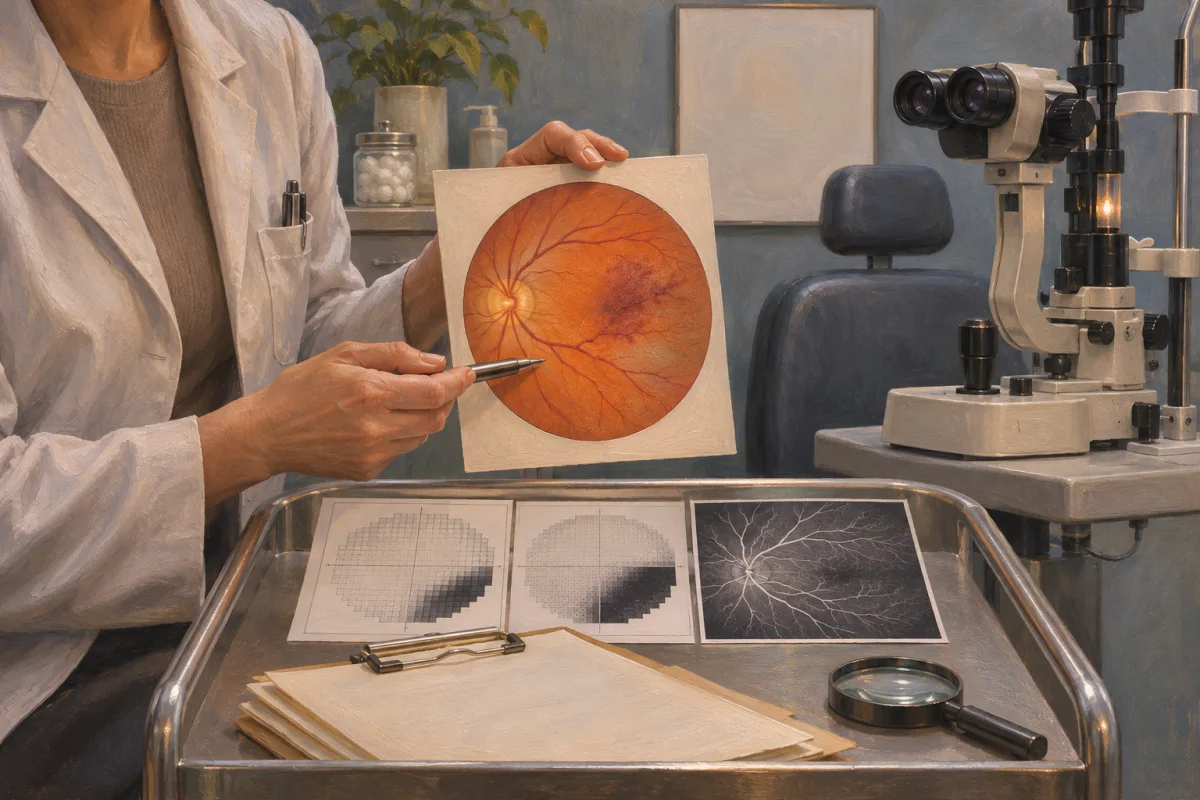
Aaron Lindh had no vision disability before a work injury. When he lost most of the vision in his left eye, a medical evaluator attributed 85 percent of his permanent disability to a previously asymptomatic blood-vessel condition and 15 percent to the work injury. The Workers’ Compensation Appeals Board rejected that split. The California Court of Appeal ordered the Board to use it because the medical evidence explained how both causes contributed to the vision disability Lindh actually had. Lindh, pp. 1–4, 20.
Why the doctor attributed the vision loss to two causes
Lindh, a law enforcement officer, took three to six blows to the left side of his head during a canine training course. He had severe headaches afterward. More than a month later, while off duty, he suddenly lost most of the vision in his left eye. Two treating physicians found problems with blood flow in the eye. Neither believed the head blows caused the vision loss. The parties nevertheless stipulated that Lindh had sustained a work-related injury to the eye. Lindh, pp. 1–2, 16 n.7.
Dr. David Kaye, the qualified medical evaluator and a specialist in vision problems involving the nervous system, identified a longstanding tendency for Lindh’s blood vessels to spasm, which he associated with Lindh’s history of migraines. He described how acute stress could affect circulation to the optic nerve in vessels already vulnerable to closure. He acknowledged uncertainty about the precise sequence. He nevertheless explained why he considered the underlying blood-vessel condition a direct contributor to the vision loss and why he thought vision loss was unlikely without it. After reviewing the data again, he revised his initial 90–10 split to 85 percent for the underlying condition and 15 percent for the work injury. Lindh, pp. 2–4, 16–17.
The distinction is what caused the lasting disability
California Labor Code § 4663 directs doctors to estimate how much permanent disability the work injury directly caused and how much other factors caused. The Board thought Kaye had confused the cause of the injury with the cause of the permanent disability. It read his references to risk as describing why Lindh was more susceptible to injury. It agreed with the workers’ compensation judge’s 40 percent permanent disability finding without apportionment. Lindh, pp. 4, 15–16.
The appellate court read the testimony alongside the reports. Kaye addressed the two questions separately and explained that his answer was the same on this record. His references to heightened risk had to be read with his repeated explanation that the vascular condition itself helped cause the impaired vision. The court also noted the treating doctors’ opinions about the head trauma. Those opinions were consistent with Kaye’s account of an underlying vascular cause. The parties had stipulated that the date of injury was the day of vision loss, weeks after the blows. The court left open how to define the injury in that circumstance. Its decision gives no shortcut for treating the cause of an injury and the cause of lasting disability as interchangeable in another case. Lindh, pp. 15–17.
Lindh could have gone his entire life without vision loss, Kaye testified. The court held that the condition could still be apportioned. California’s 2004 changes shifted the inquiry to the causes of the disability the worker has now. Apportionment required substantial medical evidence that the condition actually contributed to that disability. It did not have to show that the condition would have produced the same disability on its own. Lindh’s lack of earlier vision disability therefore did not defeat apportionment. The parties stipulated to a 40 percent rating without apportionment and a 6 percent rating with it. The court annulled the Board’s decision and sent the case back with directions to make the 85–15 apportioned award. The California Supreme Court denied review on March 13, 2019. Lindh, p. 4. Lindh, pp. 17–20. California Supreme Court minutes, p. 346.
A later case shows where the explanation falls short
In Monti, a worker suffered a heart attack while performing strenuous work. The employer argued under Lindh that smoking, obesity and genetic predisposition warranted apportionment. The qualified medical evaluator explained why he treated them as risk factors on that record and attributed the permanent disability to the work-related event. A nonprecedential Board panel denied reconsideration. It distinguished an existing condition that medical evidence shows contributed to disability from characteristics that may make a person more susceptible to an injury. The difference turned on the explanation in the report and testimony. Monti, pp. 7–10.
What to look for in your QME report
Find the section that assigns percentages to work and other causes. Read it alongside the doctor’s diagnosis, exam findings and any later report or deposition. If the doctor assigns part of your disability to a condition that never affected your work before, ask what the records show about that condition, how it contributes to the limitation you have now and what supports the percentage. A history of migraines or another diagnosis, standing alone, leaves those questions unanswered. Some injuries covered by public-safety presumptions are exempt from this apportionment rule. Nobody claimed those presumptions applied to Lindh’s eye injury. Cal. Lab. Code § 4663(e). Lindh, p. 7 n.2.
If the report offers an explanation, compare it with the treatment records and any contrary medical opinion. Our guide to evaluating medical evidence for apportionment explains what a report should contain. Lindh, pp. 16–20. Cal. Lab. Code § 4663(c).
Questions about how your QME report splits disability?
Bring the medical report and any follow-up opinions so we can review how the evaluator assigned each percentage. Call (949) 343-9735 or email office@mishrax.com.