G.M. Leasing: Public Automobile Seizures and a Private Office Entry Had Different Results
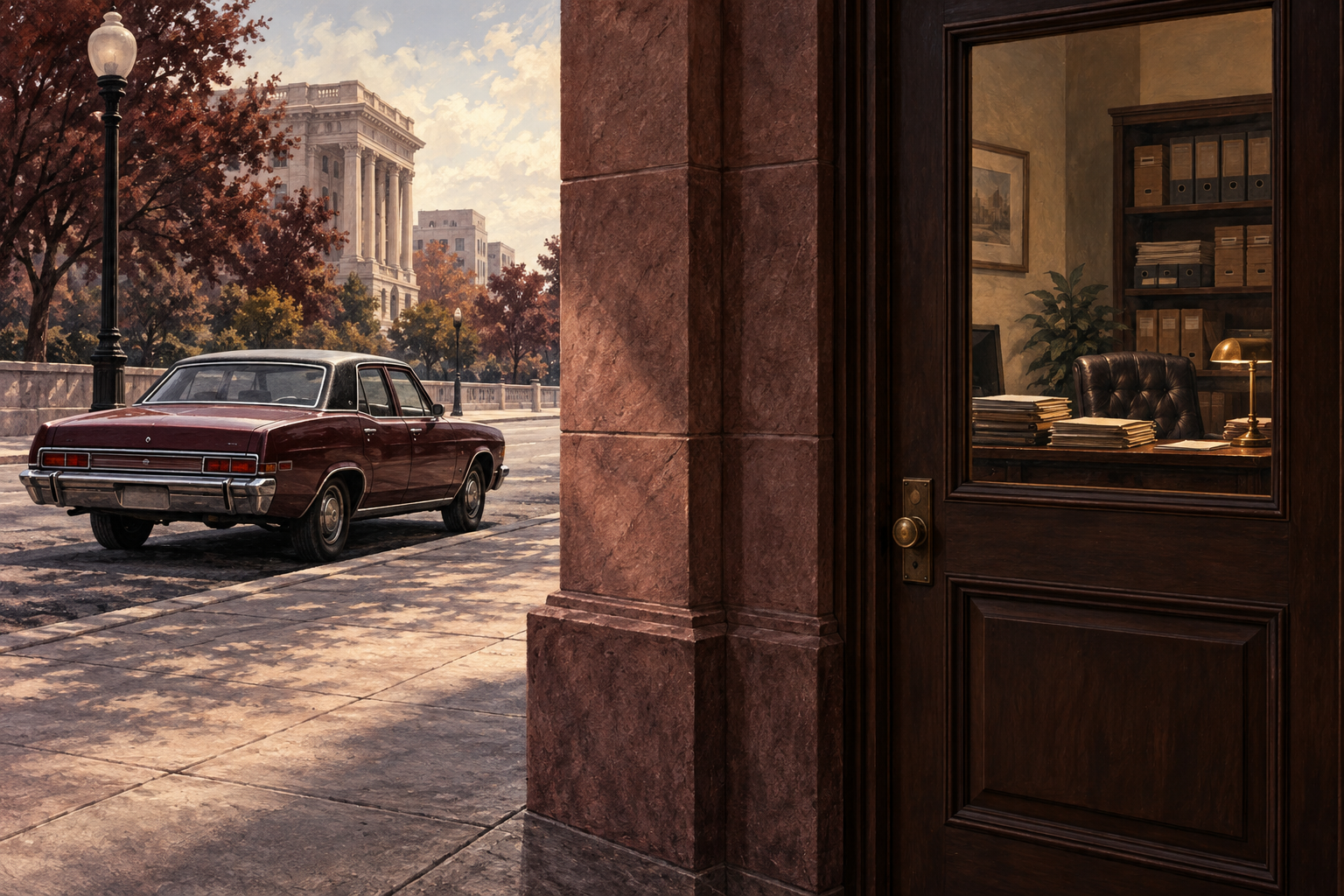
G.M. Leasing Corp. v. United States, 429 U.S. 338 (1977), distinguishes the government’s authority to seize property for unpaid taxes from its authority to enter private premises. The Supreme Court upheld automobile seizures in public places while finding the warrantless entry into the corporation’s office unconstitutional. Its remedy discussion was narrower than a blanket order undoing tax collection.
Different property required different government actions
IRS agents collected against assets connected to a taxpayer whose relationship to the corporation had been litigated as an alter-ego issue. The Supreme Court did not take up that alter-ego determination. The reviewed events included seizure of automobiles located in public places and entry into corporate premises to obtain books and records. Id. at 340–350.
The public automobile seizures did not involve the same intrusion into privacy as entering the office. The Court evaluated those events separately. The corporation’s challenge therefore could not succeed or fail as a single undifferentiated objection to all IRS activity.
Section 6331 did not supply carte blanche to enter
The government relied on its statutory levy and seizure powers. The Court read those powers as authorizing collection methods, not as silently dispensing with constitutional limits on intrusions into private space. The tax-collection interest alone could not create a categorical exception to the warrant requirement. Id. at 351–358.
The Court also rejected the premise that corporate business premises lacked Fourth Amendment protection. Differences between a home and business can matter in constitutional analysis, but the business character of an office did not eliminate the privacy interest at issue. The office entry remained subject to the ordinary rule requiring consent, proper judicial authorization, or a recognized exception.
The claimed urgency did not fit the agents’ conduct
The government alternatively invoked exigent circumstances. The Court examined the actual timing, including delays after an earlier entry and after observation of materials being moved. Those delays supported the finding that the circumstances did not justify the warrantless entry in this case. Id. at 358–359.
That analysis is factual. The holding should not be enlarged into a proposition that exigency can never matter in tax collection or that all property outside an office is automatically in a public place. The relevant privacy interest and conduct must be identified with precision.
A constitutional violation did not resolve every requested remedy
The records had been returned and their copies destroyed, making the corresponding return demand moot. The automobile-seizure challenge failed. Suppression of information from the records was premature because no proceeding using it was then before the Court. Questions concerning damages, injury, and immunity were left for further consideration on remand. Id. at 359–361.
The Court thus affirmed in part, reversed in part, and remanded. It did not cancel the underlying tax liability or guarantee damages against the agents. Present-day damages theories must account for later restrictions on implied constitutional remedies, including Egbert v. Boule, 596 U.S. 482 (2022), rather than treating the historical remand as a current cause of action.
Current IRS guidance implements consent and writ-of-entry procedures for private premises. That guidance assists in examining contemporary collection conduct, but the legal assessment still requires the actual authorization and access facts. G.M. Leasing remains useful for its separation of public seizure, private entry, and remedy—not for collapsing them into one rule.
What the decision means in practice
We therefore conclude that the warrantless entry into petitioner’s office was in violation of the commands of the Fourth Amendment.
Filed opinion, at 359.
For taxpayers challenging an entry, the practical effect is to separate the protected space, the authority asserted to enter it, and the particular remedy requested. A constitutional conclusion does not eliminate causation, immunity, statutory, or procedural barriers to relief. The public automobile result demonstrates why a whole collection operation cannot be treated as one undifferentiated intrusion.
Questions about this issue
What did the corporation win?
A ruling that the private-office entry violated the Fourth Amendment. The public automobile seizures were upheld.
Was suppression ordered automatically?
No. The Court considered suppression premature without a proceeding in which the government sought to use the material.
Does the remand guarantee a damages claim today?
No. The opinion left damages and immunity issues open, and later law governing remedies must be considered separately.
For the practical document checklist, see our related Insight.
Review the intrusion and remedy as separate issues
Mishra X Trial Lawyers can help assess the available procedure using your specific documents. Call (949) 343-9735 or email office@mishrax.com.