Arellano: Skull Reconstruction and the Longer Temporary-Disability Limit
If wage-replacement payments stop while you are still dealing with a head injury, understanding the reason matters. A dispute about the temporary-disability limit can turn on the surgery you underwent and whether the medical evidence answers the particular question before the judge.
Antonio Arellano asked the Workers’ Compensation Appeals Board to treat the removal of skull fragments and reconstruction with a titanium plate as an amputation qualifying for the longer temporary-disability limit. In Arellano v. Griffith Company, No. ADJ10647918 (WCAB Aug. 28, 2023), the majority rejected that claim and affirmed the judge’s finding. Deputy Commissioner Anne Schmitz dissented because she wanted the medical record developed before the issue was decided.
A pipe accident led to skull reconstruction
Arellano sustained an accepted head and neck injury while working for Griffith Company in Brea on August 24, 2016. At the December 2021 trial, he described trying to remove a water pipe from a trench. He testified that a machine lifted the pipe, which flipped and fell on him. He estimated its weight at about 500 pounds and said he lost consciousness.
The adopted judge’s report describes the operation performed the day of the accident. Surgeons removed depressed fracture pieces from the right parietal area of the skull and covered the resulting defect with a titanium plate and screws. That description supplied the concrete procedure the Board had to assess. Arellano also testified at trial that he had not worked since the injury.
Why the amputation exception mattered
For Arellano’s 2016 injury, the adopted report applied the ordinary limit of 104 compensable weeks of temporary disability within five years of injury. It then considered the amputation exception, which allows a higher ceiling of 240 compensable weeks within five years of injury. Those provisions appear in Labor Code section 4656(c)(2) and (c)(3)(C). The 240 weeks are the total ceiling for a qualifying injury, with payments tied to temporary disability.
The definition came from Cruz v. Mercedes-Benz of San Francisco, 72 Cal.Comp.Cases 1281 (WCAB 2007) (en banc). There, the Board defined amputation as severance or removal of a limb, part of a limb or another body appendage. The definition includes both traumatic loss in an industrial accident and surgical removal during treatment. Its distinction between external projecting body parts and internal parts supplied the rule applied to Arellano’s skull surgery.
The majority rejected two arguments about the skull
Arellano first argued that the skull was a jointed appendage and that removing fragments therefore met the definition. He relied on language from an educational website. The adopted report questioned the basis and meaning of that description and identified the absence of substantial medical evidence supporting his classification. Applying Cruz, it reasoned that the skull bone was not an external protruding body part like an ear.
He also argued that removing the fragments reduced the skull’s size. The report compared that argument with the thumb-shortening decision he cited, Parco. As the report explains that comparison, medical testimony in the thumb case established seven millimeters of shortening after the injury and surgery. In Arellano’s record, it found no substantial medical evidence that the skull had been reduced in size. The documented procedure showed fragments removed and replaced with a plate.
These were connected questions about the structure involved and the evidence of what surgery changed. The majority adopted the judge’s reasoning and affirmed the February 1, 2022 finding that the claimed exception did not apply.
Schmitz focused on what the medical reports addressed
Schmitz saw a record that needed further development. Her dissent identified only two trial exhibits: Dr. David Kupfer’s report and Dr. Marvin Bergsneider’s operative report. Her concern was what those documents addressed and whether they supplied a medical basis for deciding the disputed skull question.
Kupfer’s report addressed orthopedic injuries to the knees, shoulders and cervical spine. Schmitz emphasized that he deferred conclusions about neurological impairment to an appropriate specialist. Although he referred to two reports by neurologist Dr. Thomas Schweller, she said those reports were not in evidence. A reference to another doctor’s report left the relevant report itself outside the trial record she described.
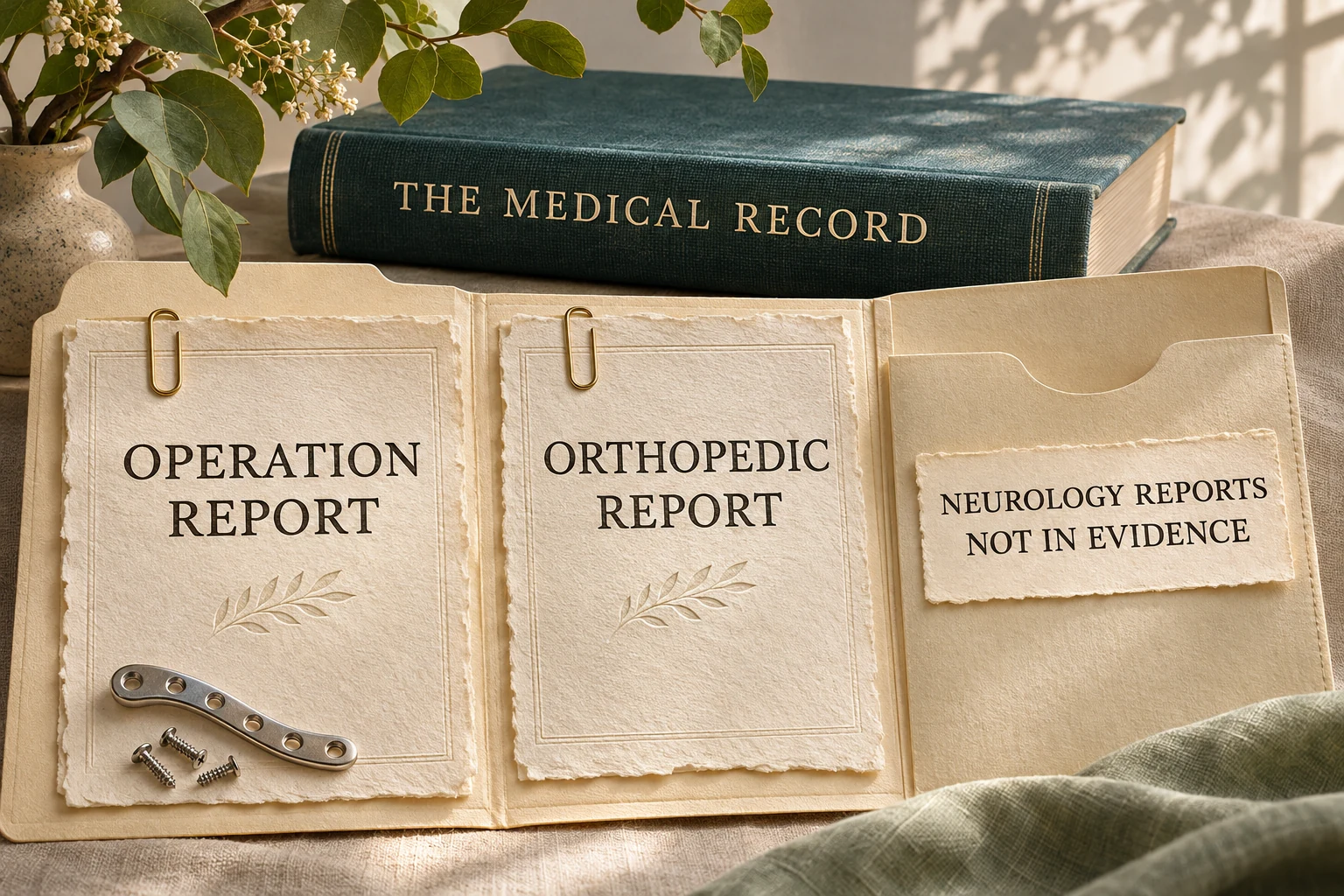
The operation report described the procedure and postoperative findings. Schmitz found that description insufficient to supply the medical opinion needed to decide whether this partial skull removal fell within the exception. She wanted medical evidence about the skull injury that would let the Board apply the exception, including the gap left by the orthopedic report’s referral to a specialist.
Her proposed response was to rescind the finding and return the case for further development of the record. That proposal differed from the majority’s decision to affirm. The distinction matters when reading the medical discussion: Schmitz explained why she wanted another step; the majority’s order left the existing denial of the exception in place.
The actual result was an affirmance
The Board’s August 28, 2023 order affirmed the February 2022 finding. Read the chronology as a historical claim involving an August 2016 injury, a December 2021 trial and the later reconsideration decision. The ruling resolves the claimed amputation exception on that record.
Our separate Cruz analysis examines the wage-payment and treatment terms in that decision’s amended award. For a payment-stop notice in your own claim, the guide to the duration of workers’ compensation benefits explains how to compare the stated reason with the payment and medical record. Arellano adds a different lesson: Examine whether the reports actually address the anatomy and issue on which the claimed exception depends.
What to review in a comparable surgery dispute
Start with the operation record describing what was removed and reconstructed. Then identify the medical opinion addressing the disputed injury and statutory classification. Compare the doctor’s stated specialty and the questions answered with the question the judge was asked to decide.
Check the hearing’s exhibit list as well. If one report refers to a specialist’s report, determine whether the specialist’s actual report was included and what it says. The distinction Schmitz identified was concrete: The operation description, orthopedic assessment and referenced neurology reports were different documents with different roles. That comparison helps focus a review on the actual evidentiary gap.
Sources
The WCAB’s official Arellano decision includes the majority, Schmitz’s dissent and the adopted judge’s report. The linked official Cruz opinion supplies the underlying definition, and the Legislature’s linked section 4656 supplies the current statutory text. The discussion of Parco describes the comparison made in Arellano’s adopted report.
Have the operation record and medical opinions reviewed together
Mishra X Trial Lawyers can review a disputed temporary-disability limit alongside the surgery record, relevant medical opinions, hearing exhibits and actual Board order. Bring the decision and the reports it identifies. Call (949) 343-9735 or email office@mishrax.com.