
After an ICE Detention: How Family Can Locate, Contact, Fund, and Document the Case
Review the primary official source.
The first hours after an immigration arrest produce incomplete and sometimes conflicting information. Family members can reduce avoidable delay by verifying identity and location through official channels, reading the specific facility rules, and keeping a custody log without publishing private identifying information.
Locate with accurate identifiers
ICE’s Online Detainee Locator System can search adults in ICE custody and people held by CBP more than 48 hours. An A-number search requires nine digits, adding leading zeroes when necessary. A name search requires accurate biographical information. Recent transfers may not appear immediately.
Record the person’s full legal name, aliases used in filings, date and country of birth, A-number, arrest date and place, agency involved, and any known facility. Share sensitive identifiers only with trusted counsel and family members who need them.
Verify the facility’s own rules
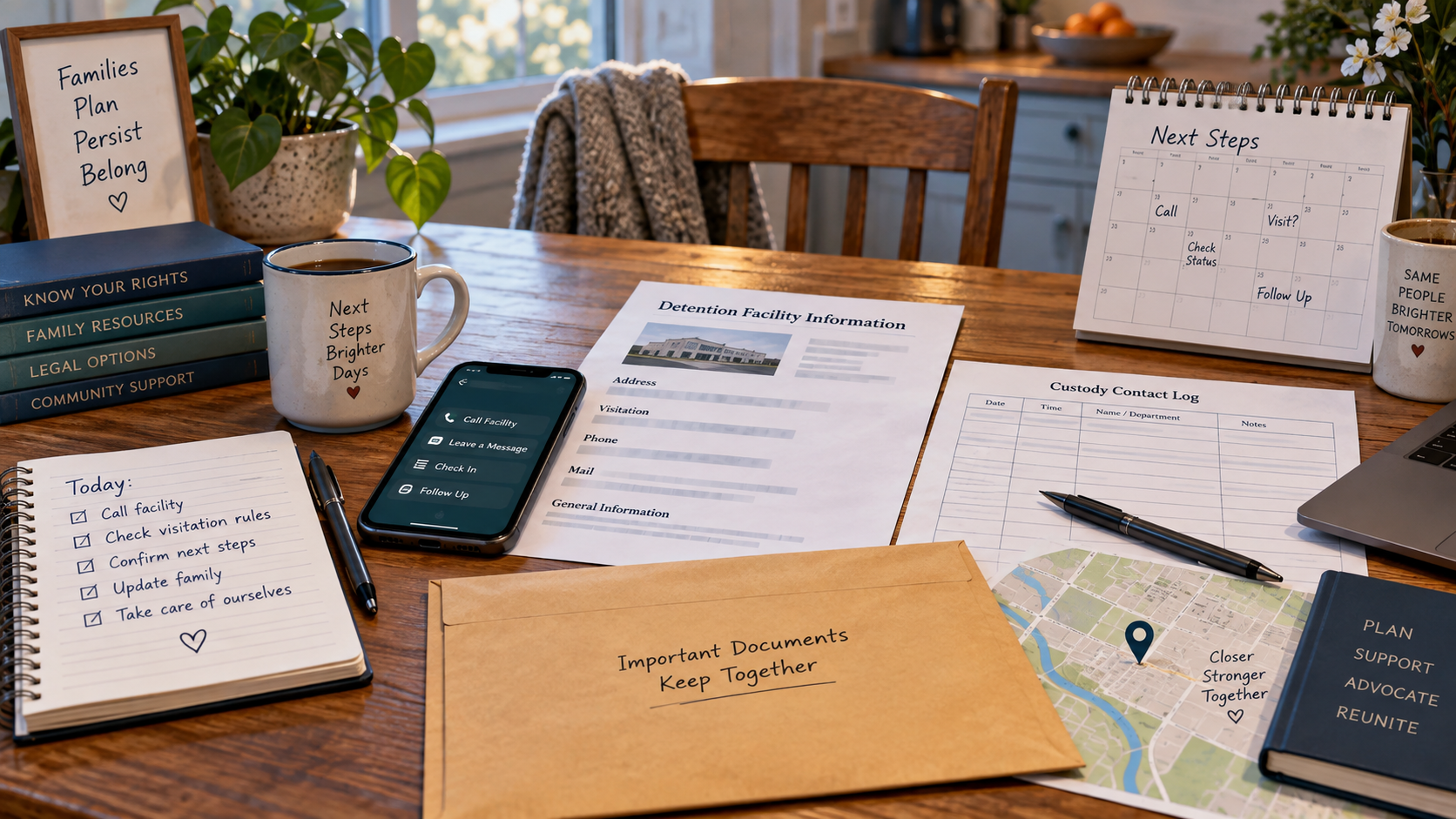
ICE maintains facility pages with current addresses, field offices, visiting procedures, attorney access, phone information, mail rules, and methods for depositing funds. Hours and restrictions can change, so call the facility before travel and follow its current identification and approval requirements.
Do not send cash, prohibited items, or documents through an unverified intermediary. Save the official page, confirmation number, receipt, and date of every attempted contact or deposit.
Protect legal communication and records
Ask the detained person to preserve notices, charging documents, custody decisions, property receipts, medical requests, grievance records, and hearing information. Family should keep copies of immigration filings, identity documents, sponsor evidence, criminal dispositions, and the contact history.
ICE states that facility legal-visitation procedures must provide a process to exchange documents with legal representatives even when contact visitation is unavailable. Counsel should verify confidential-call, video-visit, and document-exchange options with the specific facility.
Track transfers and urgent needs
Maintain a dated log of locations, calls, missed medications, medical requests, transfers, hearings, bond requests, and communications with agencies or counsel. Confirm every location again before mailing papers or appearing for a visit.
A family emergency, medical concern, or inability to reach counsel may require escalation through the facility, field office, detention-reporting channels, or court process. The proper route depends on the verified facts; a social-media post is not a substitute for a documented request.
Questions about your legal options?
Mishra X Trial Lawyers evaluates matters in this practice area. Call (949) 343-9735 or email office@mishrax.com.