Highway 50 Road-Worker Death: When Workers’ Comp and Third-Party Claims Overlap
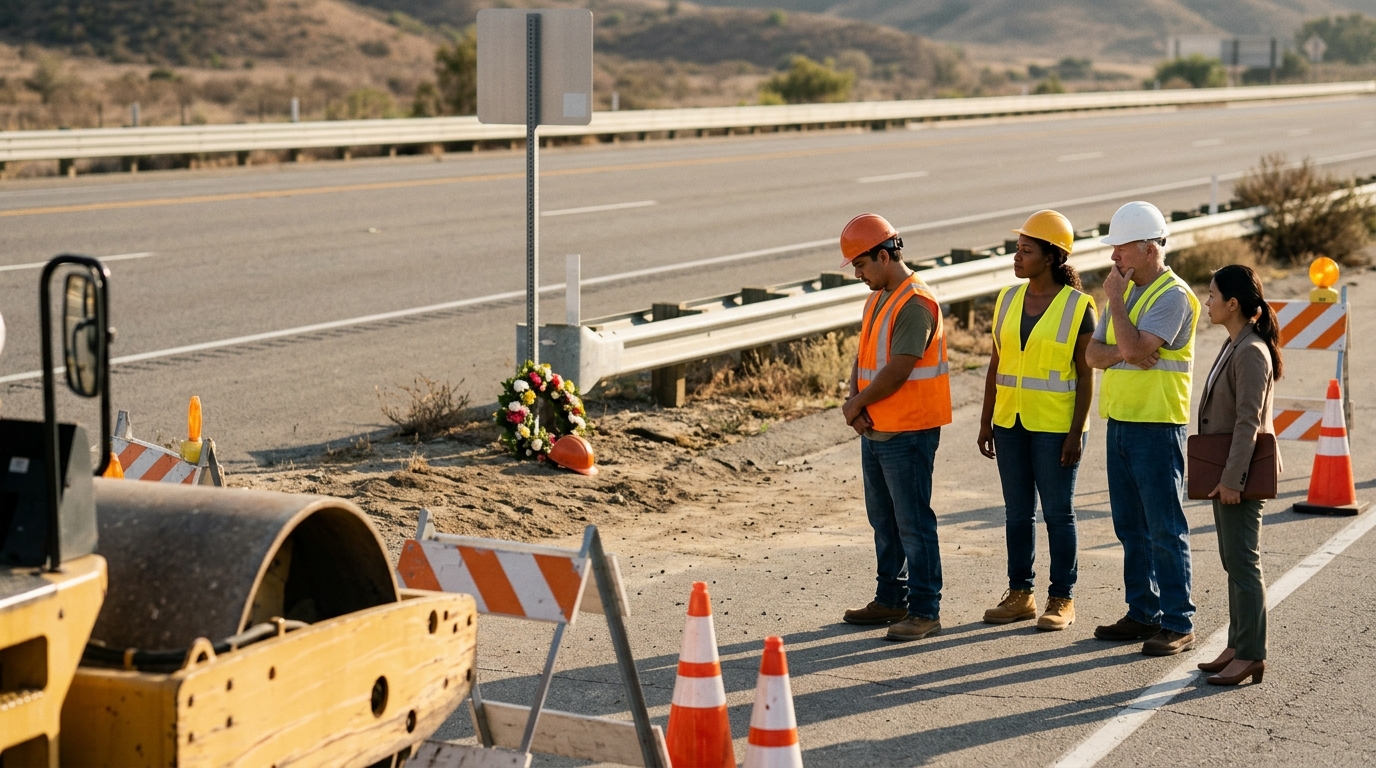
The death of a road-construction worker on Highway 50 is a stark reminder that a workplace fatality can involve more than one legal system. When a worker is killed by someone outside the employer’s organization, California workers’ compensation death benefits and a potential civil claim against a third party may exist at the same time.
CBS Sacramento reported that Onias Avila De Rodriguez, 45, of Modesto, was killed during overnight road work on August 10, 2026, on eastbound Highway 50 at the Stockton Boulevard overpass. According to CHP, a Honda entered a coned-off lane and struck a construction vehicle. A company spokesperson said a truck had been positioned as a barrier and that the Honda continued and struck the worker, who fell from the elevated freeway. CHP said the driver fled, was later apprehended, and alcohol was suspected.
Why One Event May Create Two Different Claims
Workers’ compensation death benefits
California workers’ compensation generally addresses injuries and deaths arising out of and occurring in the course of employment without requiring the family to prove ordinary negligence by the employer. The Division of Workers’ Compensation explains that death benefits may be payable to a spouse, children, or other dependents when an employee dies from a work-related injury or illness. Reasonable burial expenses may also be covered, subject to statutory limits.
Dependency is a legal question, not merely a family label. Marriage, age, disability, actual financial support, household arrangements, and timing can affect who qualifies and in what amount. California also imposes specific time limits. A family should not assume that an employer’s awareness of the accident automatically protects every dependent’s rights.
A third-party civil claim
Workers’ compensation is usually the exclusive remedy against the employer for an industrial injury, but it does not necessarily shield a negligent person or business outside the employment relationship. Cal. Lab. Code § 3852 preserves claims against a third party responsible for an employee’s injury or death.
In a road-work incident, potential third-party issues can include driver conduct, vehicle ownership, commercial insurance, roadway or traffic-control responsibilities, and the roles of contractors or other entities. Evidence should be preserved before vehicles are repaired, electronic data is overwritten, memories fade, or temporary traffic-control materials disappear.
The Two Recoveries Must Be Coordinated
Workers’ compensation and civil damages address different losses. Compensation death benefits are defined by statute. A wrongful-death or survival action may address other legally recoverable harms, depending on the facts and eligible claimants. But the systems are not independent pots of money.
An employer or workers’ compensation insurer that pays benefits may assert reimbursement, lien, or credit rights in a third-party case. Questions about employer negligence can also affect allocation. Early coordination matters because a settlement or release drafted for one claim can affect another. Families should understand who is releasing whom, what insurance is involved, and how liens will be addressed before signing.
Evidence That Can Disappear Quickly
A fatal work-zone investigation may involve several overlapping sources of proof:
- CHP collision reports, photographs, measurements, and witness statements;
- body-camera, dash-camera, nearby surveillance, or passing-vehicle video;
- vehicle event-data recorders, telematics, phone records, and maintenance history;
- the temporary traffic-control plan, lane-closure permit, daily logs, and safety briefing;
- cone, sign, lighting, barrier, and protective-vehicle placement;
- contracts identifying the employer, general contractor, subcontractors, and responsible entities;
- time records, payroll, benefit records, and documents showing dependency or financial support;
- medical, coroner, and death-certificate records; and
- all applicable automobile, commercial, umbrella, and workers’ compensation policies.
Families rarely control all of this information. A focused preservation request can be more valuable than an immediate public accusation. It tells relevant parties to retain specific evidence while investigators determine what occurred.
Recorded Statements and Early Releases Require Care
After a widely reported accident, insurers may seek statements or offer assistance quickly. Families should provide necessary facts to authorized investigators, but they should distinguish official cooperation from a recorded insurance interview designed to evaluate coverage or liability. It is reasonable to ask who the interviewer represents, whether the conversation is recorded, and how the statement will be used.
Likewise, a payment described as prompt help may arrive with release language. A broad release can extend beyond the immediate payer or beyond the claim a family believed it was resolving. No one should sign a document they do not understand, particularly while dependency, probate authority, insurance limits, and workers’ compensation liens are still being evaluated.
A Practical Checklist for Families
- Confirm that the employer and workers’ compensation carrier received written notice.
- Identify potential dependents and preserve proof of financial support.
- Obtain the investigating agency’s report number and contact information.
- Request preservation of vehicles, electronic data, video, traffic-control plans, and contracts.
- Collect employment, payroll, insurance, medical, and family-status records.
- Do not post investigative details or private family information online.
- Review any recorded-statement request, authorization, settlement, or release before agreeing.
- Obtain timely advice about the different deadlines governing death benefits and civil claims.
The Practical Lesson
A road worker can be injured in the course of employment even when the immediate cause is a stranger’s vehicle. Workers’ compensation may provide a defined source of benefits while the more complex third-party investigation proceeds. Conversely, opening a compensation claim does not necessarily preserve a civil claim against an outside wrongdoer.
The best early strategy is coordinated rather than rushed: protect the statutory claim, preserve third-party evidence, identify all insurance, and avoid releases that solve one problem by unintentionally damaging another.
Questions After a Fatal California Work Incident?
Mishra X Trial Lawyers evaluates California workers’ compensation and related third-party issues. Call (949) 343-9735 or email office@mishrax.com.