Lactation Accommodation at Work in California: Break Time, a Private Space and Your Employer’s Policy
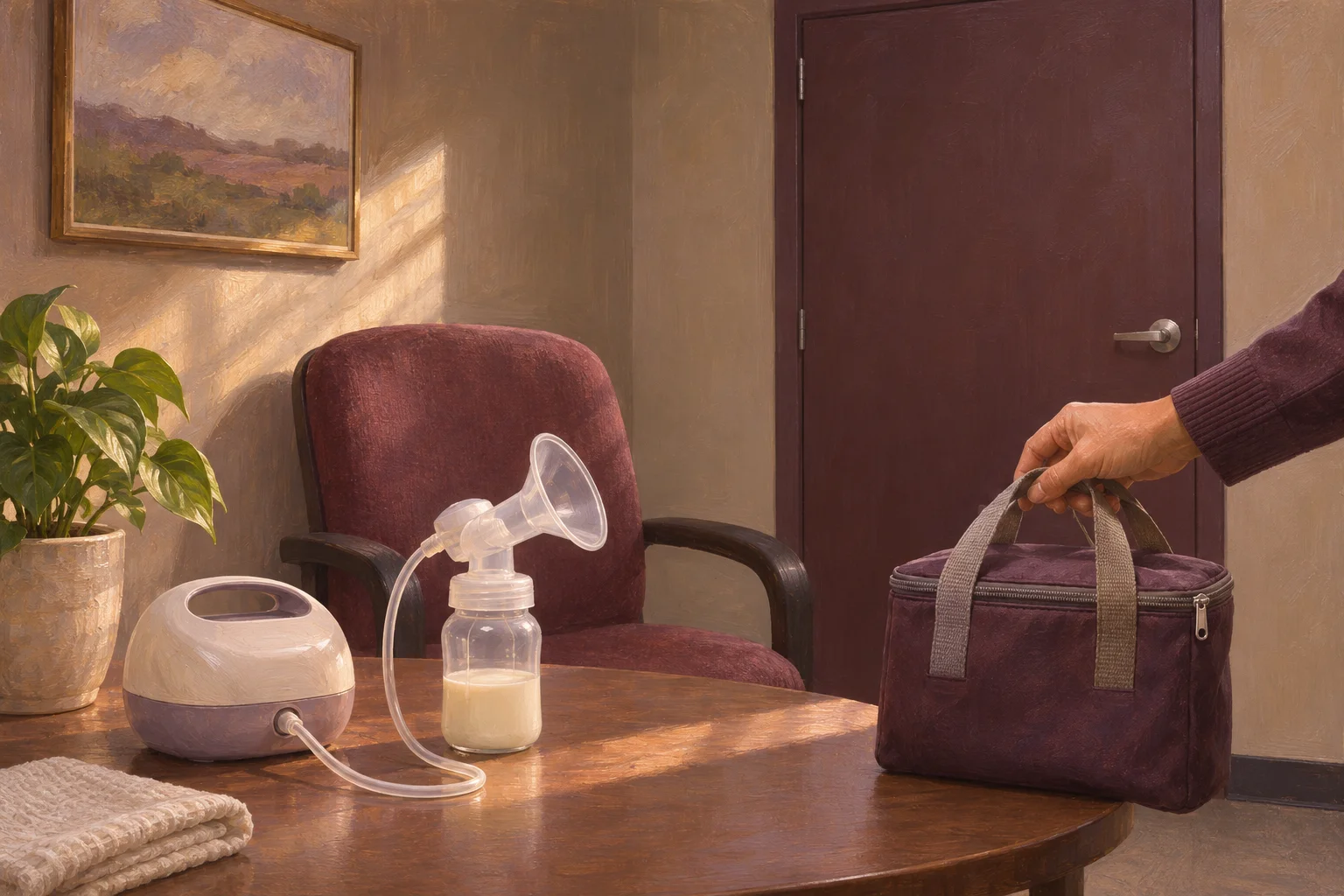
If you are going back to work while breastfeeding, California law requires your employer to give you break time to pump each time you need it and a private place to do it that is not a bathroom. The rule covers every employer, including the state and local governments. Pumping time beyond your regular paid rest breaks can be unpaid. California has a narrow exception for serious operational disruption, and an employer with fewer than 50 employees can seek an exemption from some room requirements by proving undue hardship.
Break time each time you need it
Labor Code section 1030 requires “a reasonable amount of break time to accommodate an employee desiring to express breast milk for the employee’s infant child each time the employee has need to express milk.” The schedule follows your need, not a fixed number of breaks set by the employer.
The break should run at the same time as your regular breaks when possible. Time that runs during your regular paid rest period remains part of that paid break. Extra time beyond the rest period “shall be unpaid,” in the California statute’s words. The Labor Commissioner says that time “need not be paid.” The Labor Commissioner’s lactation FAQ also says your employer “cannot require you to submit any documentation regarding your need to express breast milk,” such as a doctor’s note.
The California statute’s break-time exception is in section 1032: when providing it “would seriously disrupt the operations of the employer.” Our reading: That is a high bar, and ordinary inconvenience does not meet it. The federal PUMP Act (29 U.S.C. § 218d) separately requires breaks each time a covered employee needs to pump during the first year after birth. A pumping break counts as work if the employee is not completely relieved of duties throughout.
The space your employer must provide
Section 1031 requires a room or other location to express milk in private. It “shall not be a bathroom” and must be close to your work area, shielded from view and free from intrusion while you use it. The space must also:
- be safe, clean and free of hazardous materials;
- have a surface for a breast pump and personal items;
- have a place to sit; and
- have access to electricity, or an alternative such as an extension cord or charging station, for an electric or battery-powered pump.
Separately, the employer must give you access to a sink with running water and a refrigerator for storing milk near your workspace; if a refrigerator cannot be provided, another cooling device, such as an employer-provided cooler, may be used.
The statute allows several practical arrangements. Your own workspace can qualify if it meets the requirements. A shared or multipurpose room works only if lactation takes priority while you are using it. An employer in a multitenant building may share a space with other employers if it cannot provide one within its own workspace, and an employer may designate a temporary location because of operational, financial or space limits, as long as it is not a bathroom and otherwise complies. An agricultural employer complies by providing a private, enclosed and shaded space, such as an air-conditioned truck or tractor cab.
An employer with fewer than 50 employees may be exempt from a particular requirement if it can show undue hardship, meaning significant difficulty or expense given its size, resources and structure. Even then, it must make reasonable efforts to give you a private location near your work area “other than a toilet stall.” The burden is on the employer to show the hardship.
The written lactation policy
Section 1034 requires every employer to adopt a lactation policy that states your right to request accommodation, explains how to request it, describes the employer’s obligation to respond, and states your right to complain to the Labor Commissioner. The policy must appear in the handbook or the set of policies the employer makes available. The employer must give it to new hires and to any employee who asks about or requests parental leave.
The policy also creates a paper trail. If the employer “cannot provide break time or a location that complies with the policy,” section 1034(d) requires a written response to the employee. Our reading: A spoken refusal does not meet that requirement.
How to ask
Our advice:
- Find the lactation policy in the handbook and follow its request process. If you cannot find one, ask HR for it in writing.
- Make the request in writing before you return, if you can, and say roughly how often you expect to need a break.
- If the offered space does not meet section 1031, say what is missing (privacy from intrusion, a chair, a surface or an outlet) and ask for a fix.
- Keep a simple log of the date and time of any break you were denied or cut short, and of any time you had to pump somewhere that did not comply. Each instance can matter.
If your employer says no
Section 1033 gives three routes to the Labor Commissioner:
- A wage claim for premium pay. Denying reasonable break time or adequate space is treated as a missed break under section 226.7. Section 226.7 sets the premium at one hour of pay at your regular rate for each workday your employer fails to provide the required break or space. The Labor Commissioner lists three years to file a wage claim for “unpaid rest and meal breaks.” Our wage claim guide explains the process.
- A report to field enforcement. After an inspection or investigation, the Labor Commissioner may impose a civil penalty of $100 “for each day that an employee is denied reasonable break time or adequate space to express milk.”
- A retaliation complaint. Section 1033(b) bars firing or otherwise retaliating against you for exercising these rights. The FAQ says a retaliation claim must be filed “within a year of the retaliation.”
Treatment because you breastfeed can also be sex discrimination. The Fair Employment and Housing Act defines “sex” to include “Breastfeeding or medical conditions related to breastfeeding” (Government Code section 12926(r)(1)(C)). A complaint to the Civil Rights Department about that kind of discrimination generally must be filed within three years under section 12960(e)(5). If you are also planning leave around the birth, our guide to pregnancy disability leave and baby bonding explains how those periods fit together.
- Labor Code section 1030 — lactation break time
- Labor Code section 1031 — lactation space
- Labor Code section 1032 — serious disruption
- Labor Code section 1033 — remedies and retaliation
- Labor Code section 1034 — written lactation policy
- Government Code section 12926 — “sex” includes breastfeeding
- Government Code section 12960 — CRD complaint deadlines
- Labor Commissioner — Lactation Accommodation FAQ
- Labor Commissioner — How to File a Wage Claim
- 29 U.S.C. § 218d — federal pumping breaks and compensation
Denied a break or a proper place to pump?
Bring the lactation policy (or your request for it), any written response, and your log of denied or shortened breaks, and we can explain which claims fit and how to pursue them. Call (949) 343-9735 or email office@mishrax.com.